活动概况 / Overview
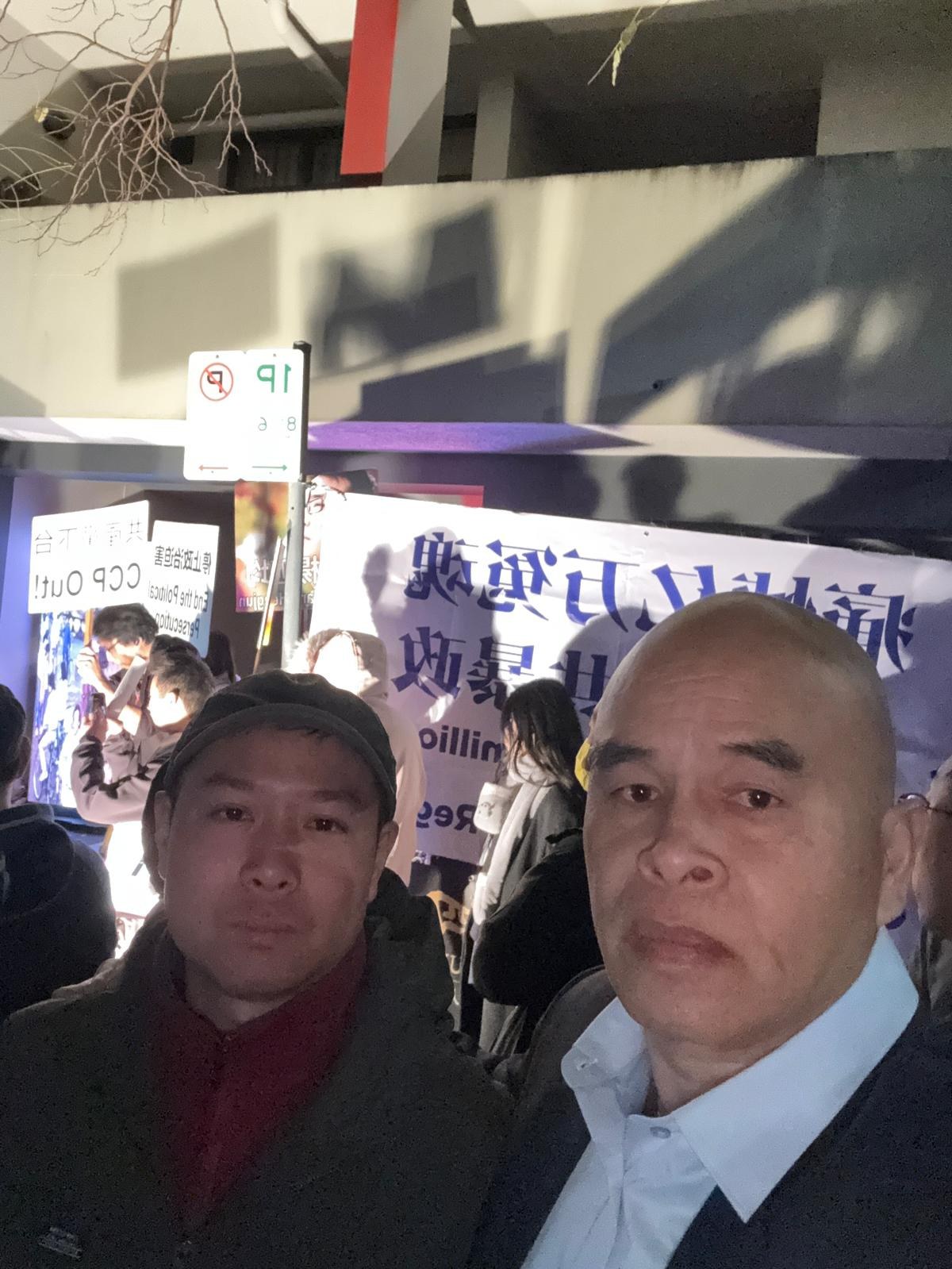
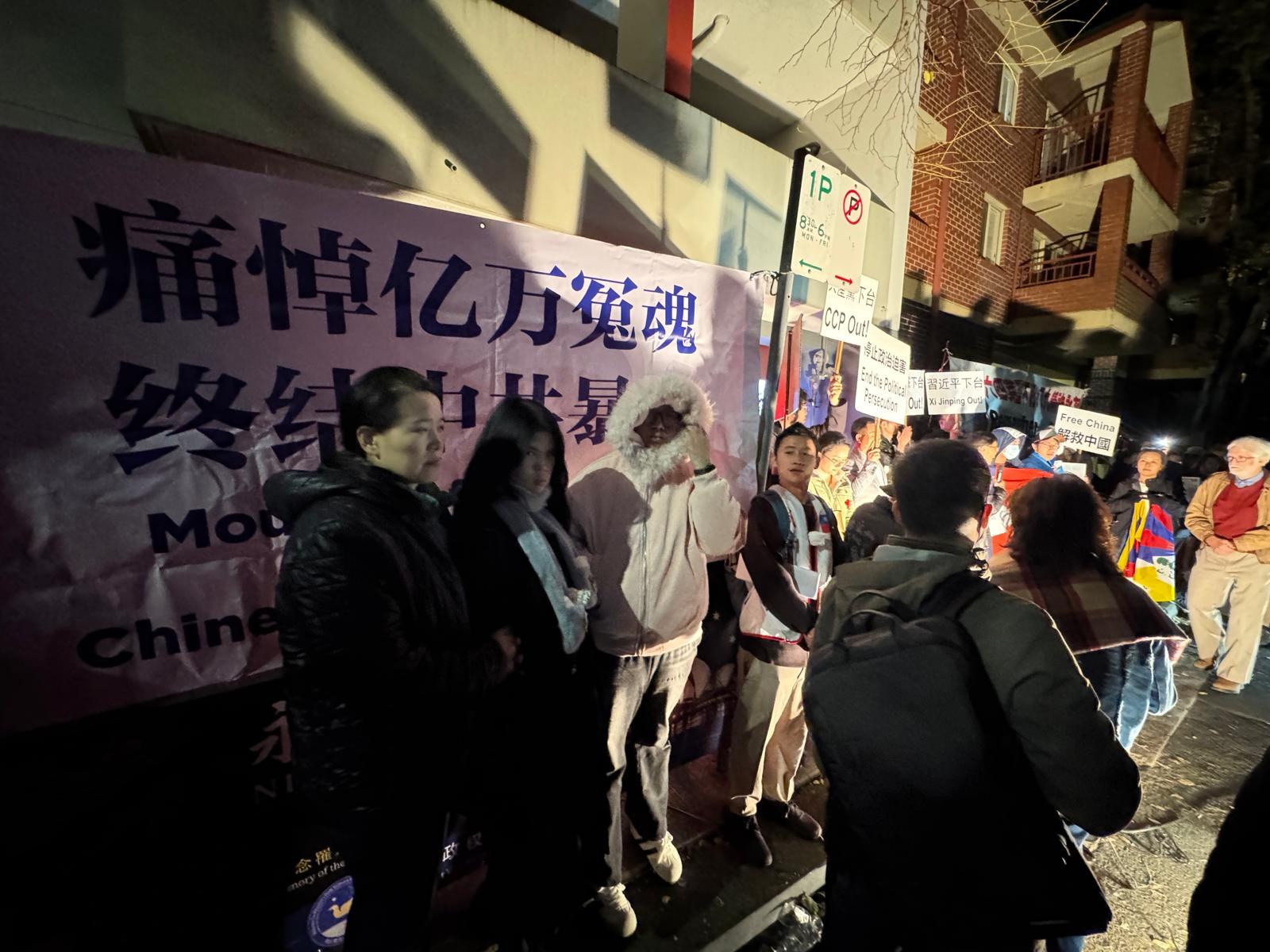
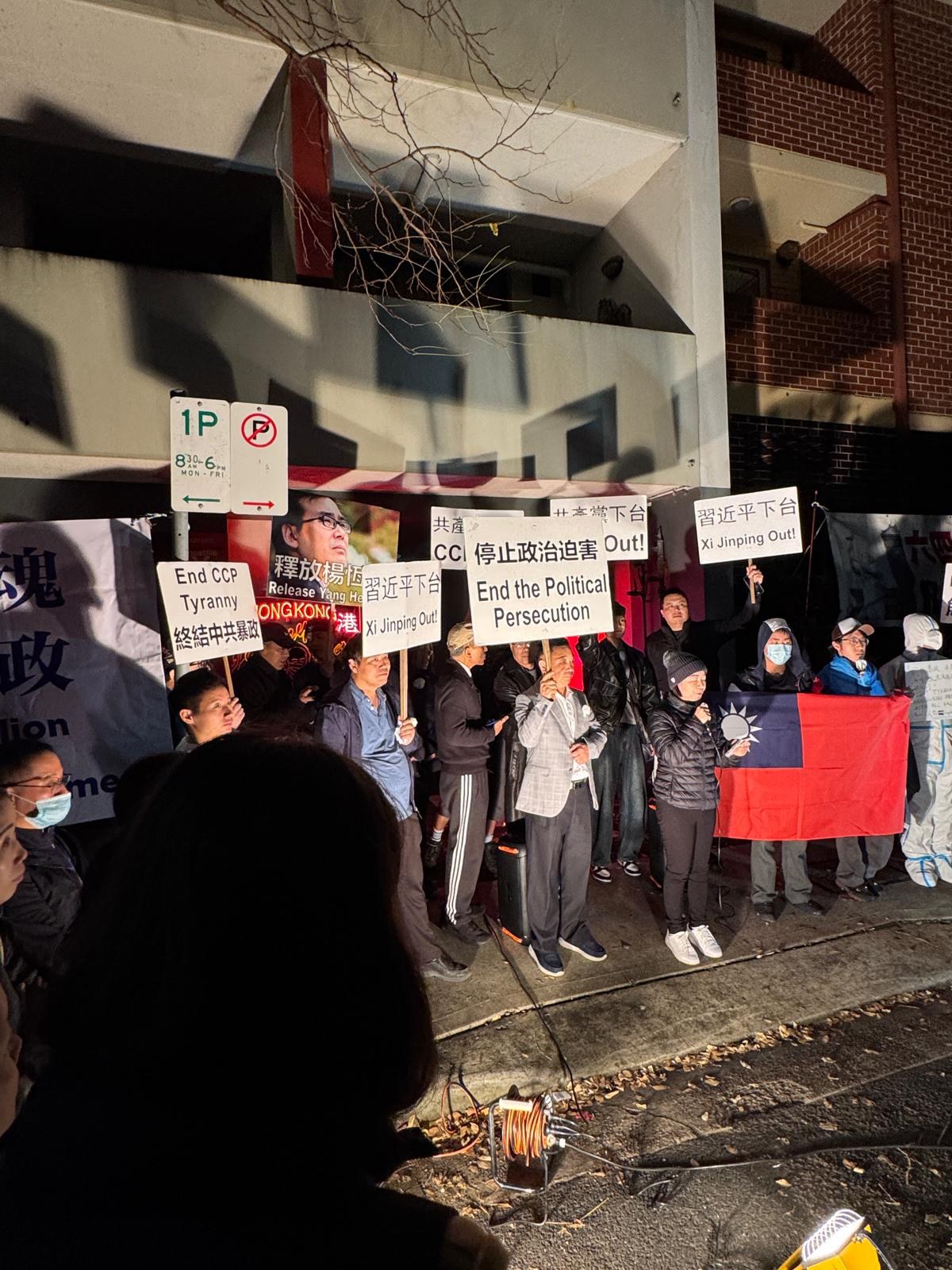
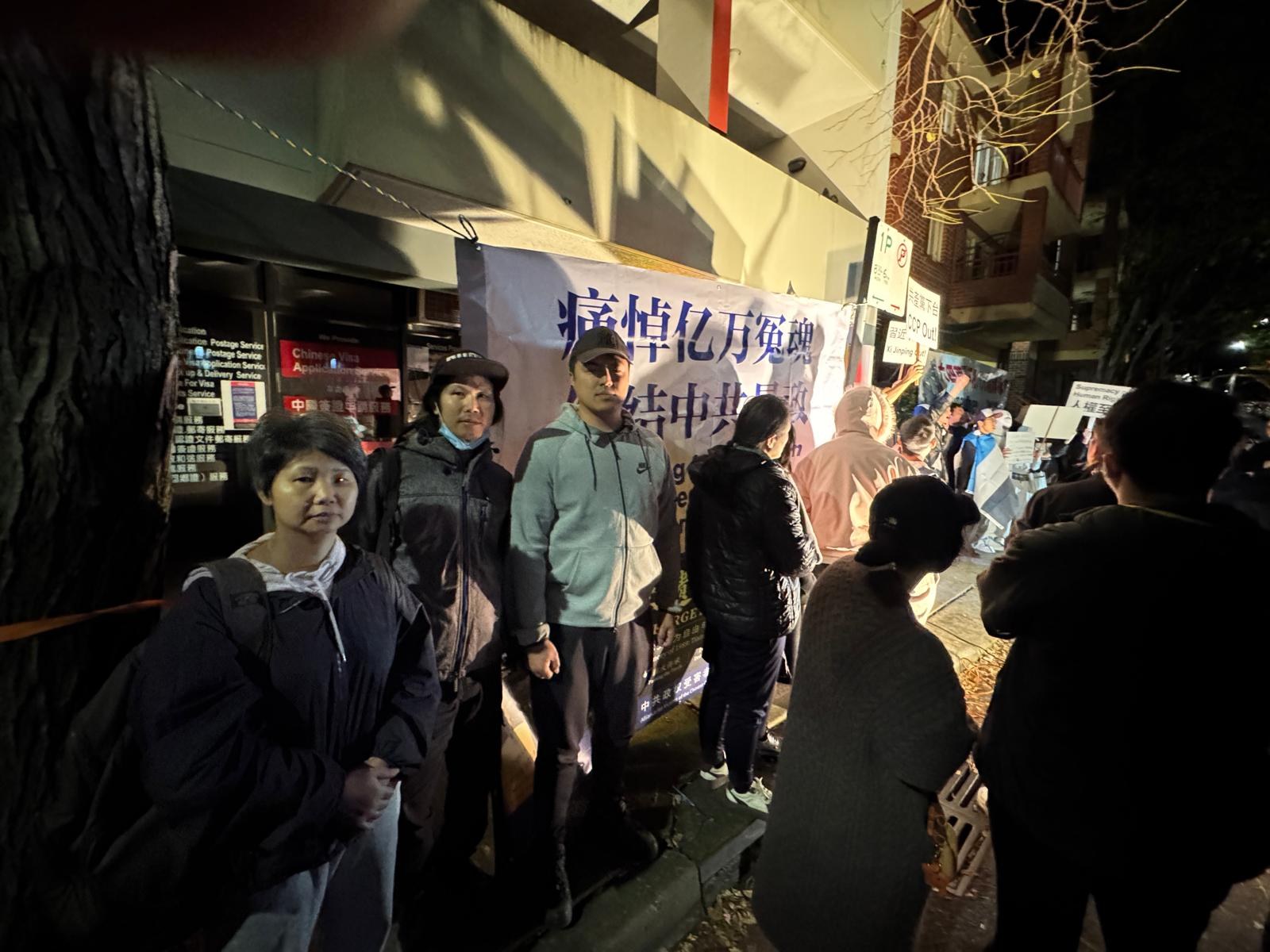
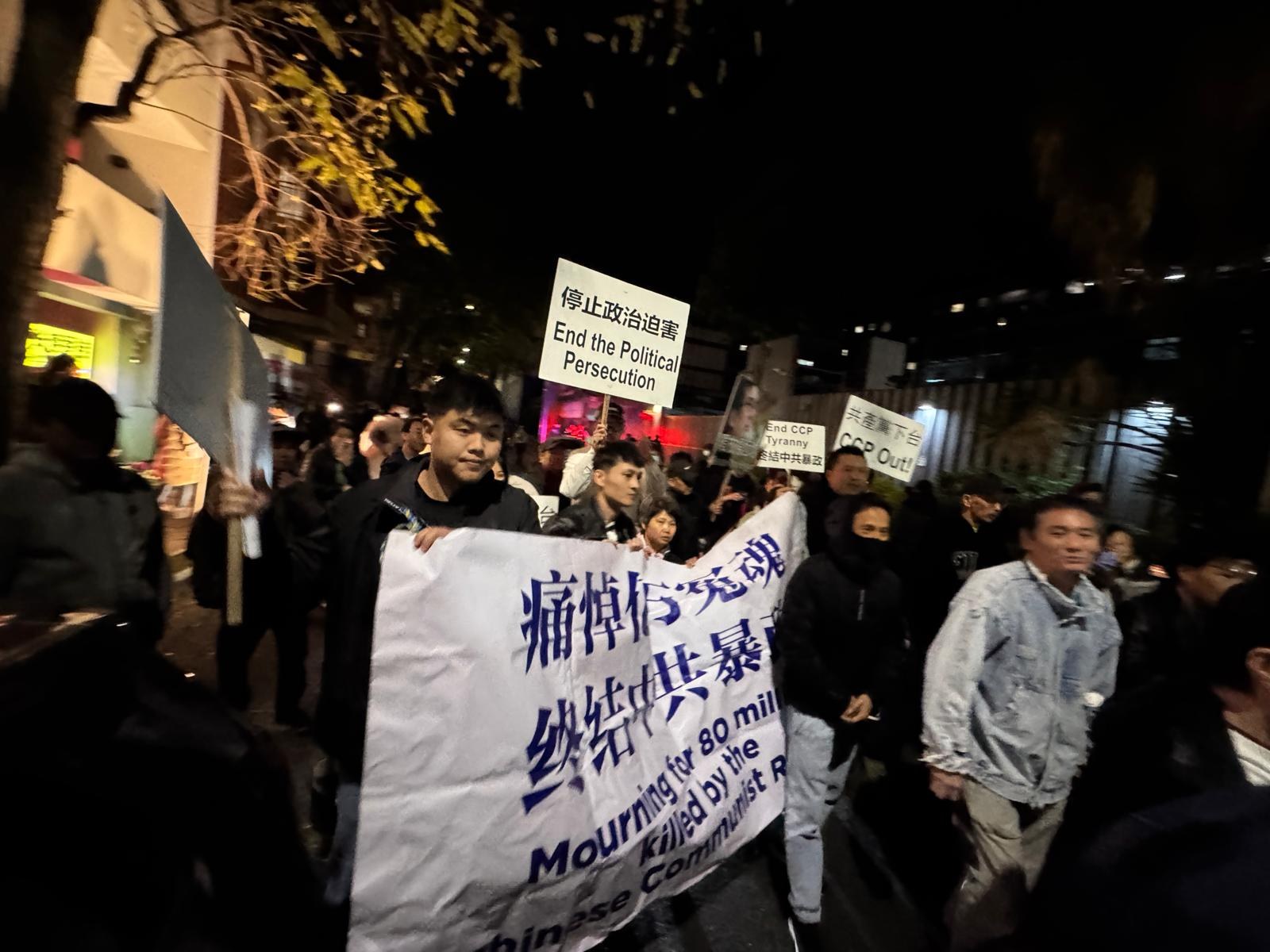
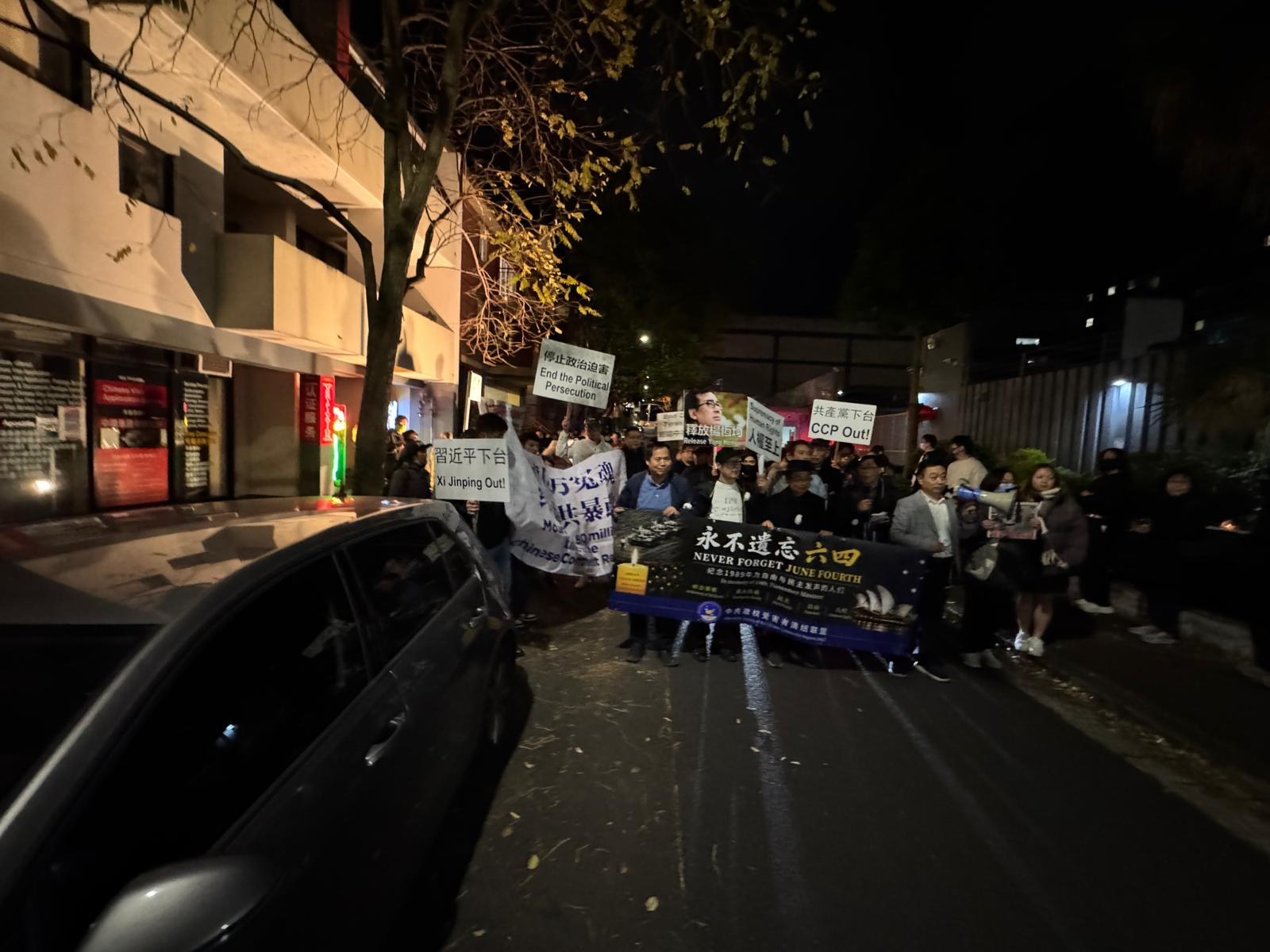
2026年6月4日傍晚,悉尼中国总领事馆门前聚集了来自不同背景的华人民主人士、人权活动者、青年学生及多个族群代表,举行纪念“六四”事件的烛光守夜与抗议集会。现场参与者手持标语、点燃烛光、高喊口号,以默哀、发言、游行等方式悼念六四遇难者,并表达对中国民主、人权与自由的诉求。
On the evening of June 4, 2026, Chinese democracy advocates, human rights activists, young students, and representatives from multiple communities gathered outside the Chinese Consulate-General in Sydney for a candlelight vigil and protest commemorating June 4. Participants held signs, lit candles, chanted slogans, observed silence, delivered speeches, and marched to mourn the victims while expressing their demands for democracy, human rights, and freedom in China.
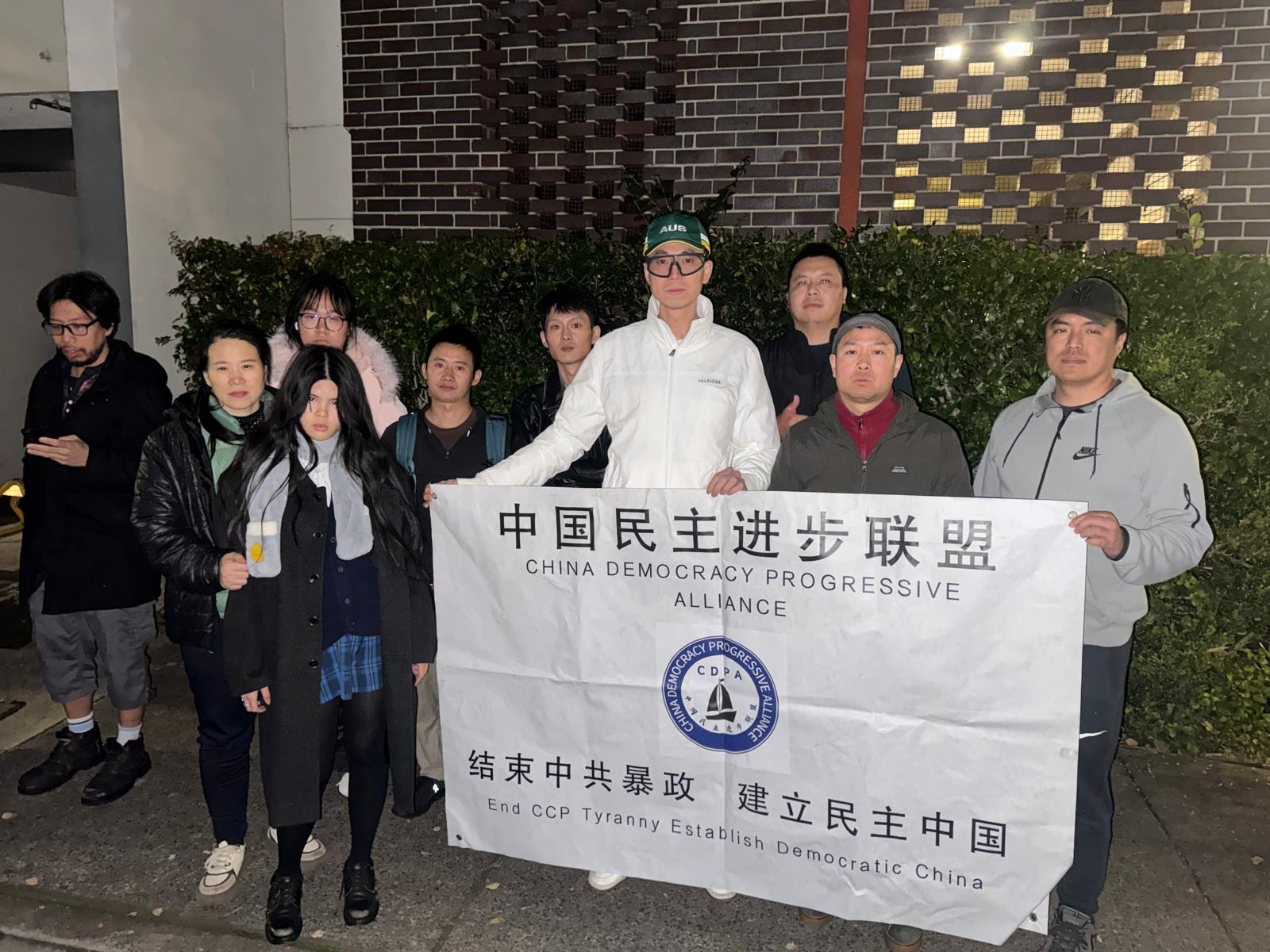
据现场观察,参与集会的群体包括中国民主进步联盟、六四学运领袖、复国党、满洲人民党、西藏流亡政府相关代表、香港民主人士、台湾民主人士、澳洲人权代表、来自中国的悉尼大学学生,以及LGBTQ+群体等。中国民主进步联盟主席携家人、女儿及十多名成员到场参加。整场活动共有上百人参与,现场也有多名记者进行拍摄、录像与采访记录。
According to observations at the scene, participants included the China Democracy Progressive Alliance, leaders from the 1989 student movement, the China Revival Party, the Manchurian People’s Party, representatives related to the Tibetan government-in-exile, Hong Kong democracy advocates, Taiwanese democracy supporters, Australian human rights representatives, students from the University of Sydney from China, and LGBTQ+ participants. The chairman of the China Democracy Progressive Alliance attended with his family, his daughter, and more than a dozen members. More than one hundred people participated, and several journalists were present to take photos, film, and conduct interviews.
下一代与亲历记忆 / The Next Generation and Lived Memory
中国民主进步联盟主席的女儿也出现在现场。她参与民主运动已长达十多年,从年幼时便随家人参加相关活动,成为海外民运现场中一道独特的风景线。据其家人表示,她童年时期曾经历中共当局在心理层面的施压,年仅几岁时便被限制出境。这样的童年记忆,使她很早便对中共政权的压迫本质有了切身感受。
The daughter of the chairman of the China Democracy Progressive Alliance also appeared at the event. She has participated in democracy-related activities for more than ten years, joining her family at public events since childhood and becoming a distinctive presence in the overseas democracy movement. According to her family, she experienced psychological pressure from the Chinese authorities during her childhood and was restricted from leaving China when she was only a few years old. These early memories gave her a direct understanding of the oppressive nature of the CCP regime.
多年过去,她仍持续参与公共发声,以自己的经历提醒外界:极权政治对人的伤害,并不只发生在成年人身上,也会延伸到儿童、家庭与下一代的成长记忆之中。
Years later, she continues to take part in public advocacy. Through her own experience, she reminds the outside world that the harm caused by authoritarian politics does not only affect adults; it can also extend to children, families, and the memories of the next generation.
烛光、标语与沉默 / Candles, Signs, and Silence
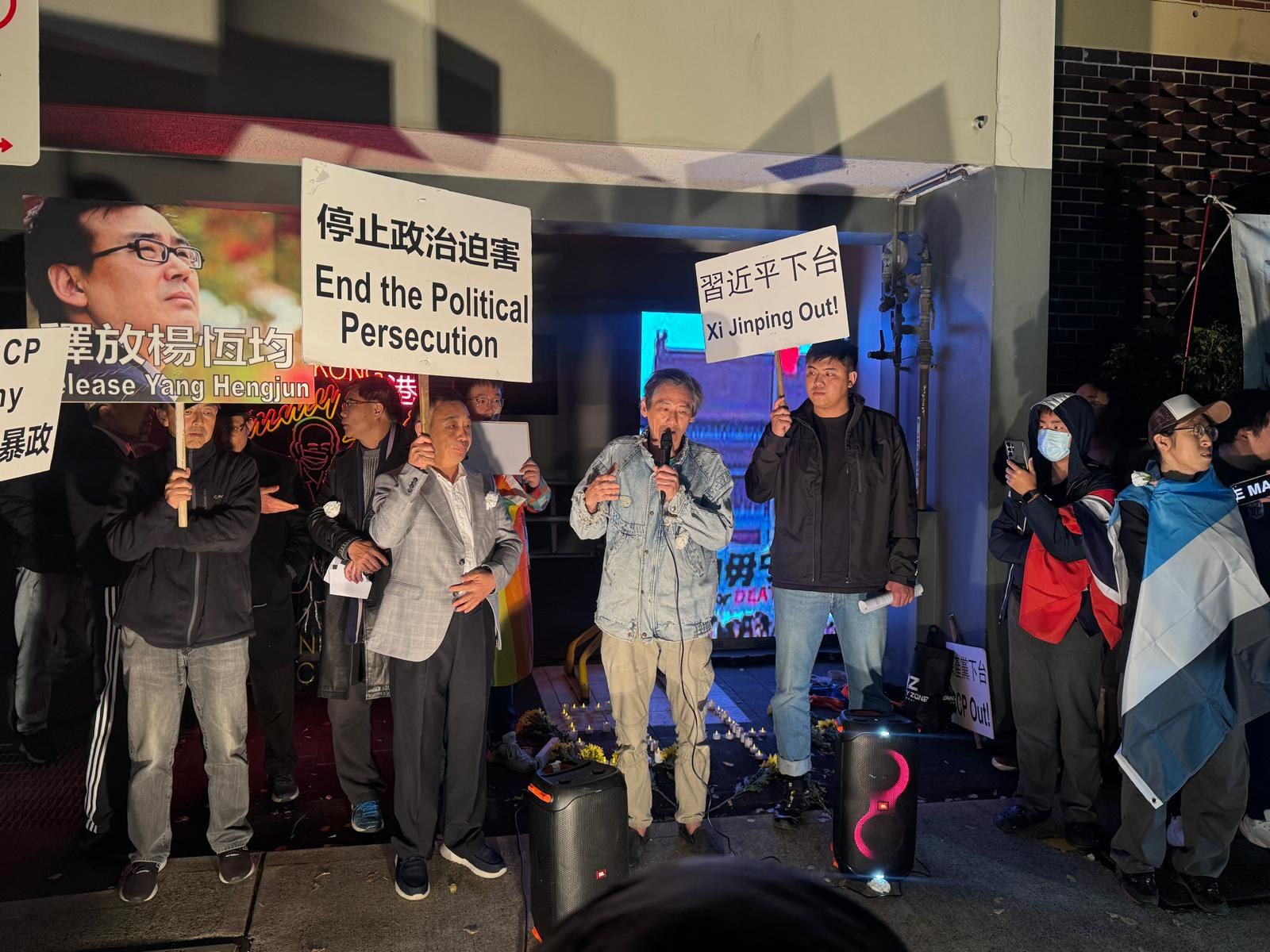
集会现场,参与者举起写有“共产党下台”“停止政治迫害”“释放政治犯”“习近平下台”等字样的牌子。夜色之下,烛光与标语交织在一起,形成鲜明的政治表达。许多参与者表示,六四不仅是一段历史,更是一场仍在延续的现实抗争。
At the gathering, participants held signs reading “CCP Out,” “End the Political Persecution,” “Release Political Prisoners,” and “Xi Jinping Out.” Under the night sky, candles and protest signs formed a powerful political expression. Many participants said that June 4 is not only a historical event, but also an ongoing struggle in the present.
仪式开始后,主持人带领全体参与者为六四遇难者默哀一分钟。现场一度安静下来,参与者低头肃立,烛光在风中摇曳。默哀结束后,不同群体代表依次发表讲话。发言者回顾1989年中国学生与市民追求民主自由的历史,也谈及当下中国大陆、香港、西藏、满洲及海外华人社群所面对的政治压迫、身份困境与跨国镇压。
After the ceremony began, the host led all participants in a one-minute silence for the victims of June 4. The scene became quiet as participants stood with heads bowed while candles flickered in the wind. After the silence, representatives from different groups spoke in turn. Speakers reviewed the history of Chinese students and citizens seeking democracy and freedom in 1989, and also addressed political repression, identity struggles, and transnational repression faced by people in mainland China, Hong Kong, Tibet, Manchuria, and overseas Chinese communities.
恐惧、审查与留学生发声 / Fear, Censorship, and Student Voices
多名发言者指出,六四记忆在中国大陆长期遭到严密封锁。每到6月4日前后,微信账号、社交媒体平台都进入高度审查状态,相关讨论几乎完全被禁止。有人表示,即便只是发布空白内容、改变头像或个人简介,也可能遭到平台限制,甚至引来警方上门谈话。在这样的高压政治环境下,许多普通人陷入极度恐惧,连沉默本身都可能被视为一种“表达”。
Several speakers pointed out that the memory of June 4 has long been tightly suppressed in mainland China. Around June 4 each year, WeChat accounts and social media platforms enter a state of heightened censorship, and related discussions are almost completely prohibited. Some participants said that even posting blank content or changing an avatar or profile could result in platform restrictions or even police visits. Under such intense political pressure, many ordinary people live in fear, and even silence itself can be treated as a form of expression.
来自中国的悉尼大学学生在发言中表示,中共长期试图用恐惧给海外留学生施压,让他们不敢公开表达、不敢参与集会、不敢为自由与民主发声。但他说,海外留学生不应继续活在恐惧之中,更不应把沉默当成安全。他呼吁大家不要恐惧、不要害怕,只有团结一致,才能打倒中国共产党。
A University of Sydney student from China said in his speech that the CCP has long used fear to pressure overseas Chinese students, making them afraid to speak publicly, attend rallies, or advocate for freedom and democracy. He said overseas students should not continue living in fear, nor should they mistake silence for safety. He urged people not to be afraid, saying that only through unity can the Chinese Communist Party be defeated.
绕馆游行与口号 / March Around the Consulate and Chants
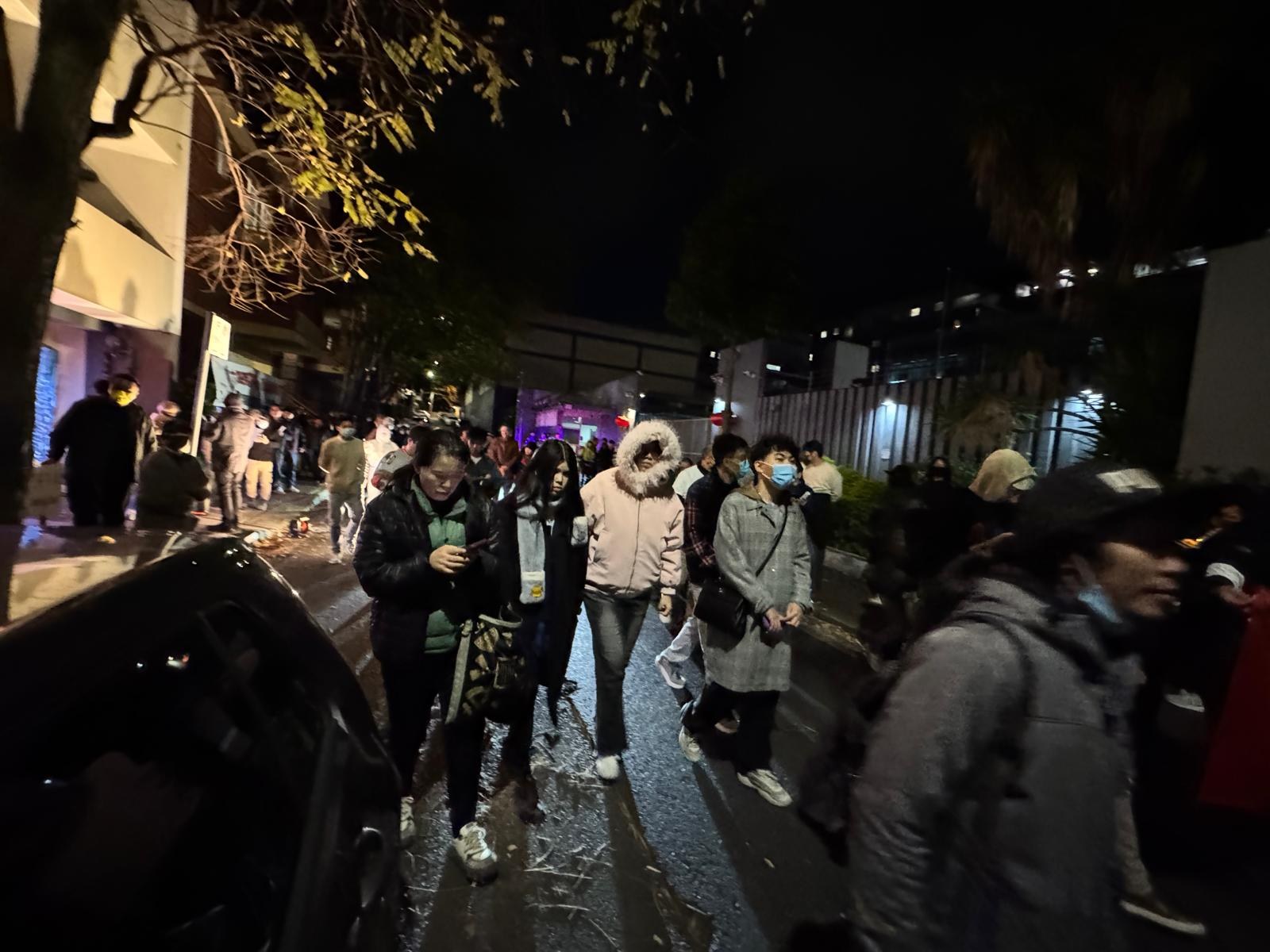
随后,参与者拉起横幅,绕中国总领事馆步行一周。游行过程中,中国民主进步联盟成员纪懿宸(Samuel)带领众人持续齐声高喊口号:“勿忘六四,血债血还”“六四英烈不朽,八九精神永存”“打倒中共暴政,自由属于人民”“民主万岁,自由万岁”“光复香港,时代革命”。一声声口号回荡在总领事馆外,表达了参与者对六四镇压的愤怒,也象征着对中共当局长期压制历史记忆、打压异议声音的不满。
Participants later raised banners and marched around the Chinese Consulate-General. During the march, CDPA member Ji Yichen (Samuel) led the crowd in chanting slogans including: “Never forget June 4, blood debts must be repaid,” “The martyrs of June 4 are immortal, the spirit of 1989 lives on,” “Down with CCP tyranny, freedom belongs to the people,” “Long live democracy, long live freedom,” and “Liberate Hong Kong, revolution of our times.” The chants echoed outside the consulate, expressing anger over the June 4 crackdown and opposition to the CCP’s long-term suppression of historical memory and dissenting voices.
现场参与者认为,这些口号并非单纯的政治姿态,而是对中共政权持续压迫的回应。对他们而言,六四不仅代表1989年北京街头的枪声和牺牲,也代表此后数十年中国社会中被禁止的记忆、被删除的文字、被监控的言论,以及被迫沉默的一代又一代人。
Participants said these slogans were not merely political gestures, but responses to the CCP regime’s continuing repression. For them, June 4 represents not only the gunfire and sacrifice on the streets of Beijing in 1989, but also decades of forbidden memory, deleted words, monitored speech, and generations forced into silence.
绕中国驻悉尼总领事馆游行高喊口号视频 / Videos of Marching and Chanting Around the Chinese Consulate-General in Sydney
绕中国驻悉尼总领事馆游行高喊口号视频(一)March Around the Chinese Consulate-General in Sydney — Chanting Slogans (I)
绕中国驻悉尼总领事馆游行高喊口号视频(二)March Around the Chinese Consulate-General in Sydney — Chanting Slogans (II)
注:中国民主进步联盟成员纪懿宸在游行过程中带领大家高喊口号。
Note: CDPA member YICHEN JI led participants in chanting slogans during the march.
绕中国驻悉尼总领事馆游行高喊口号视频(三)March Around the Chinese Consulate-General in Sydney — Chanting Slogans (III)
注:中国民主进步联盟成员纪懿宸在游行过程中带领大家高喊口号。
Note: CDPA member YICHEN JI led participants in chanting slogans during the march.
LGBTQ+群体与更广泛的压迫 / LGBTQ+ Participants and Wider Repression
今年的活动中,LGBTQ+群体代表的出现也引发现场关注。部分代表身着带有彩虹标志的服饰,并以封住嘴巴的方式进行象征性表达,意在呈现中国性少数群体在言论、身份表达和公共空间中遭遇的压制。有参与者指出,在中国大陆,LGBTQ+群体近年来面临越来越严厉的社会与政治压力,社交平台对相关身份标识、个人简介及公共表达不断收紧。
The appearance of LGBTQ+ representatives also drew attention at this year’s event. Some wore clothing with rainbow symbols and used symbolic gestures such as covering their mouths to express the suppression faced by sexual minorities in China in speech, identity expression, and public space. Participants noted that LGBTQ+ communities in mainland China have faced increasingly severe social and political pressure in recent years, with social platforms tightening controls on identity labels, personal profiles, and public expression.
现场代表表示,自习近平上台以来,中国当局在社会文化政策上逐渐趋于保守,对公民社会、女权、LGBTQ+社群、劳工组织和青年公共表达的打压不断加重。一些地方权力机关甚至利用性少数群体的脆弱处境进行威胁、勒索或其他形式的侵害,使本就缺乏制度保障的群体承受更大风险。
Representatives at the scene said that since Xi Jinping came to power, Chinese authorities have become increasingly conservative in social and cultural policy, intensifying pressure on civil society, feminism, LGBTQ+ communities, labor organizations, and youth public expression. Some local authorities have even exploited the vulnerability of sexual minorities through threats, extortion, or other forms of abuse, placing already unprotected groups at greater risk.
跨族群共同发声 / Joint Voices Across Communities
香港民主人士在发言中谈到香港自由空间的急剧收缩,并呼吁国际社会不要遗忘香港抗争者;台湾民主人士强调民主制度与公民社会的重要性;西藏流亡政府相关代表呼吁持续关注民族、宗教与文化权利;满洲人民党及其他族群代表也表达了对中共民族政策、政治压迫和身份打压的不满,呼吁国际社会关注不同群体在中共统治下所遭受的长期伤害。
Hong Kong democracy advocates spoke about the rapid shrinking of Hong Kong’s space for freedom and called on the international community not to forget Hong Kong’s protesters. Taiwanese democracy supporters emphasized the importance of democratic institutions and civil society. Representatives related to the Tibetan government-in-exile called for continued attention to ethnic, religious, and cultural rights. The Manchurian People’s Party and other community representatives also expressed opposition to the CCP’s ethnic policies, political repression, and suppression of identity, urging international attention to the long-term harm suffered by different groups under CCP rule.
海外民运的路线分歧 / Debates Within the Overseas Democracy Movement
值得注意的是,中国民主进步联盟主席虽携家人及成员到场支持活动,但本人并未参与现场讲话。他在场边表示,他认为目前海外民运的方向存在问题。他认为,“和平、理性、非暴力”的原则当然可以作为政治行动的一部分,但如果长期被固定为唯一方式,反而可能让中共政权不再感到压力。
Notably, although the chairman of the China Democracy Progressive Alliance attended the event with his family and members to show support, he did not speak on stage. On the sidelines, he said he believes the current direction of the overseas Chinese democracy movement has problems. He stated that the principles of “peace, rationality, and nonviolence” can certainly be part of political action, but if they are treated as the only fixed method for the long term, the CCP regime may no longer feel pressure.
他同时指出,一些曾公开表达更激烈反抗立场的人士,后来不是离奇死亡,就是遭遇跨国诱捕或其他形式的打压,因此他怀疑海外民运圈中可能存在中共情报人员或渗透者。这一表态反映出当前海外民运内部长期存在的路线分歧。
He also noted that some people who had publicly expressed stronger positions of resistance later died under suspicious circumstances or faced transnational entrapment or other forms of repression. He therefore suspects that there may be CCP intelligence personnel or infiltrators within overseas democracy circles. This statement reflects long-standing strategic disagreements within the overseas democracy movement.
结语 / Conclusion
当晚的活动不仅是对1989年六四事件遇难者的悼念,也是一场跨族群、跨地域、跨身份的政治表达。来自中国大陆、香港、台湾、西藏、满洲及澳洲本地人权社群的参与者站在同一地点,以不同语言、不同身份、不同历史经验,共同表达对自由、民主与尊严的追求。
The event that night was not only a memorial for the victims of June 4, 1989, but also a cross-community, cross-regional, and cross-identity political expression. Participants from mainland China, Hong Kong, Taiwan, Tibet, Manchuria, and Australian human rights communities stood together in one place, using different languages, identities, and historical experiences to express a shared pursuit of freedom, democracy, and dignity.
在悉尼中国总领事馆门前,烛光、横幅、口号、镜头与沉默交织在一起。对许多参与者而言,六四并未结束。它仍存在于被审查的历史、被压制的记忆、被监控的言论、被封锁的社交平台,以及海外流亡者与民主人士持续承受的压力之中。
Outside the Chinese Consulate-General in Sydney, candles, banners, chants, cameras, and silence intertwined. For many participants, June 4 has not ended. It still exists in censored history, suppressed memory, monitored speech, blocked social platforms, and the continuing pressure faced by exiles and democracy advocates overseas.
正因如此,他们选择在6月4日这一天走上街头,用公开的行动提醒世界:记忆不能被消灭,真相不能被封锁,对自由、民主与人权的追求,也不会因恐惧而停止。
For this reason, they chose to take to the streets on June 4, using public action to remind the world: memory cannot be erased, truth cannot be sealed away, and the pursuit of freedom, democracy, and human rights will not stop because of fear.
Editor: Samuel(Yichen Ji)
中国民主进步联盟
China Democracy Progressive Alliance